
The Chuchunya of Siberia: Wild People, Soviet Archives and the Search for Proof

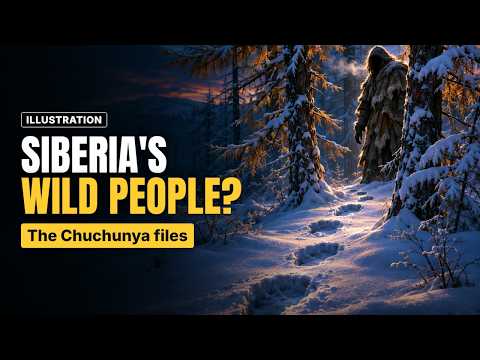
Video: The Chuchunya of Siberia: Wild People, Soviet Archives and the Search for Proof
By Dr. Elizabeth Harper, Cryptozoologist
On 9 March 1929, a commission of the West Siberian branch of the State Russian Geographical Society heard a report about wild people living in the Yakut north. Then it did something wonderfully unglamorous: it asked a local research society to collect the stories and check them. That archived commission record about chuchuna and mulens is, in my opinion, the best way into the Chuchunya of Siberia. It shows a real institution treating a strange question as worth answering, without claiming anyone had answered it.
No captured creature. No body on a table. Just a request to collect and verify. I find that far more interesting than any invented "Soviet cover-up," and I suspect you will too.
What Is the Chuchunya of Siberia?

The Chuchunya (also written Chuchuna or Chuchunaa) is a reported wild, humanlike figure found mostly in the traditions of the northern Yakut (Sakha) and Evenki peoples. A YakutiaMedia roundup of Chuchuna myths and legends describes a humanlike being of enormous height with a body covered in long hair.
The wider pool of accounts adds more: animal-skin clothing, startling speed, a habit of avoiding settlements and, in some versions, bows and knives. Some witnesses mention whistling.
Read all of that as reported traits. These sources establish no authenticated specimen, track cast or validated Chuchunya-specific test.
The clothing deserves your attention right away. A tall, long-haired figure wrapped in reindeer hide and carrying a bow is a very different proposition from a generic hairy ape-man. If you strip out the clothes and weapons to make the Chuchunya fit the Bigfoot mold, you've thrown away the most distinctive part of the evidence.
Where in Siberia Are These Reports From?
"Siberia" is a huge word. The Chuchunya tradition has actual addresses.
- Verkhoyansk Mountains and the lower Lena and Yana rivers: the focus of Pushkarev's investigation for Vokrug Sveta, which collected named witness accounts.
- The Dzhugdzhur region and the Ayano-Nelkan route: flagged by the 1929 commission as promising places to gather information.
- The Indigirka basin: the setting of later reports from the 1970s and 1990s.
If someone tells you the Chuchunya "roams Siberia," ask them where. A good answer names a river.
The Names You'll Run Into
Part of the confusion around this figure comes from the pile of names attached to it. Here's how they sort out.
| Name | Where it comes from | How to treat it |
|---|---|---|
| Chuchuna / Chuchunaa | Yakut forms discussed by linguists, tied to meanings like "wild person" or "fugitive." | The same figure as the Chuchunya, just different spellings. |
| Mulen / Myulen | A related figure discussed next to chuchuna in the 1929 commission report. | Discussed together doesn't mean biologically identical. |
| Mirygdy | Glossed as "Broad-Shoulders" in an English cryptozoology compilation. | Secondary-source terminology. |
| Mecheny | "The Marked One," a nickname for one reported individual with a distinctive white forearm. | A nickname for one individual. Not a separate species. |
The last two come from the Occult World entry on the Chuchunaa, which calls the figure a "specific type of unknown hairy hominid which may now be extinct." Useful for further reading. But a list of nicknames is not a taxonomy, and I'd resist any effort to fold every regional name into one tidy creature.
What Does Chuchunaa Mean?

The name has a longer history than any single translation suggests.
In his 1999 paper on Yakut names for "wild people", linguist A. E. Anikin compares the Yakut forms with Evenki words built from roots meaning to flee, to escape, or to hide. He also traces sound changes over time and a possible pull from Russian words and from the name of the Chukchi people.
Rozalia Bravina's 2024 study points the same way, citing the Evenki comparisons suchan and chuchani, meaning "fugitive".
So the name, at its root, points at someone on the run. Someone hiding. That's a human category before it's a biological one.
That doesn't settle anything about what witnesses saw. An elusive, armed, skin-clad stranger could be a culturally unfamiliar person, a folkloric being, or something the witness simply couldn't identify. The word can't choose among those. What it can do is warn us off the lazy gloss of "prehistoric man."
One more point I'd insist on: "wild man" here is a historical story category. It is not a description of any living Indigenous community, and it shouldn't be written as one.
The Soviet Document That Asked for Answers

The document itself sits in the National Archive of the Republic of Sakha (Yakutia). It's an extract from the minutes of a commission for identifying and studying monuments of nature and antiquity, dated 9 March 1929.
The commission was responding to a report by Professor P. L. Dravert and a student, D. I. Timofeev, about mulens and chuchuna in Tungus and Yakut traditions. Its decision: ask the research society Sakha Keskile to collect and verify information, with the Dzhugdzhur region and the Ayano-Nelkan route singled out for inquiry.
That's institutional curiosity. It is not official recognition of an unknown people, and it is definitely not proof.
A Timeline That Keeps Investigation Separate From Discovery
The timeline below runs from 1883 to 2024. For each step it shows what the record does and does not establish.
How the Chuchuna record built up, 1883–2024
Sourced data: each entry cites a numbered source listed below.
-
1883 – Seroshevsky's Kolyma district notes
Notes quoted by Bravina describe 'sea people' who vanish when grabbed, split in two and swim superbly. Shows an old, fantastical layer of the tradition, not observations of a living creature.
Sources: [9]
-
1928 – Timofeev collects accounts
Gurvich records Timofeev gathering stories from Yakut and Tungus informants. Shows fieldwork came before the commission; it is collected testimony, not evidence of a creature.
Sources: [4]
-
9 March 1929 – Commission asks for collection and checking
The commission considers the Dravert and Timofeev report and asks Sakha Keskile to collect and verify information. Institutional interest, not confirmation or official recognition.
Sources: [3]
-
26 April 1929 – Avtonomnaya Yakutia prints "Chuchuna"
The item describes tall, skin-clad figures with bows and repeats claims of killings with bodies buried. A traceable published account of local claims; the burial claims remain unverified.
Sources: [6]
-
1933 – Dravert's appeal in Budushchaya Sibir
Dravert calls for legal protection and scientific study. An appeal, not evidence that a special law was passed.
Sources: [7]
-
1970s – Starkov report, Indigirka region
An enormous shaggy humanlike figure, odd tracks and huge leaps. A track-measuring visit is mentioned, but no measurements are given.
Sources: [1]
-
1990s – Upper Moma geological survey report
A trainee reportedly sees a hairy humanlike figure and a dog panics. Witnesses are unnamed and bear misidentification is acknowledged.
Sources: [1]
-
1999 – Anikin's linguistic study
Links Yakut forms to Evenki roots meaning to flee, escape or hide. Clarifies the name's history; it can't say what any witness saw.
Sources: [5]
-
2002 – Potapov's wolf-trap account, near Baralys
A dog-sized, long-tailed animal reportedly found in a wolf trap. Buried without scientific examination, and not a tall humanlike figure.
Sources: [2]
-
2024 – Bravina's study in Eposovedenie
Traces the figure changing over centuries and suggests some later chuchuna may reflect young Chukchi wanderers. A proposed interpretation, not a universal solution.
Sources
- Чучуна | Туры по Якутии / инЯкутия
- Мифы и легенды о якутском чучуне - YakutiaMedia.ru
- Архивный документ: Как в советской Якутии искали чучуну — ЯСИА
- Таинственный чучуна - Илья Гурвич
- lang-folk.ru
- ГЛАВА 1. Сенсационное сообщение газеты «Автономная Якутия». «Таинственный чучуна» | Гурвич Илья Самуилович
- ГЛАВА 2. Призыв профессора П. Л. Драверта. «Таинственный чучуна» | Гурвич Илья Самуилович
- Чучуна: автохтонные племена в исторических преданиях и легендах якутов | Бравина | Эпосоведение
- ЧУЧУНА: АВТОХТОННЫЕ ПЛЕМЕНА В ИСТОРИЧЕСКИХ ПРЕДАНИЯХ И ЛЕГЕНДАХ ЯКУТОВ
Much of this chronology survives because ethnographer Ilya Gurvich went looking for it. His book The Mysterious Chuchuna records Timofeev's 1928 collecting work and reproduces historical material, sometimes abridged.
The Newspaper Story With the Buried Bodies
I love how Gurvich found the newspaper. In the opening chapter on the "sensational" Avtonomnaya Yakutia report, he says a conversation partner mentioned unknown people living in the North. Gurvich doubted it. He was told to look up the 26 April 1929 issue in the Rumyantsev Museum. He did, and there it was.
The item describes tall, strongly built figures wearing animal skins and carrying bows. It also repeats claims that hunters had killed some of them, but that the bodies were buried and the killings hushed up.
These burial claims remain unverified. A buried, unreported body is the cryptozoological equivalent of a photo nobody can produce.
Dravert's Appeal and Ksenofontov's Pushback
In 1933, Dravert published a long article titled "Wild People Myulens and Chuchuna" in the journal Budushchaya Sibir. Gurvich reprints it in his chapter on Professor P. L. Dravert's appeal.
Dravert's position puts protection before certainty. If these were people, they deserved legal protection and scientific attention. I respect that instinct. You don't wait for a perfect dataset before deciding not to shoot someone.
The opposing view was already on the table. Yakut ethnographer G. V. Ksenofontov read the chuchuna as a mythological mountain figure, not an undiscovered population. So the argument we're still having today was fully formed by the early 1930s.
Which Came First, 1928 or 1929?
A small date tangle is worth flagging. The YakutiaMedia retelling labels 1928 as the first written reference, while Gurvich dates the newspaper item to 26 April 1929. Both can be true if they refer to different things: Timofeev's 1928 collecting versus the 1929 newspaper piece. I wouldn't crown either one as the uncontested "first ever" mention.
The Witness Who Described Reindeer-Skin Clothing

The encounter I'd put in front of any skeptic comes from Pushkarev's Vokrug Sveta piece. A woman named Elena Gorokhova recalled a sighting from shortly after the Revolution, near the Niem River, a tributary of the Yana.
She described a figure emerging from bushes about 40 meters away and crossing a clearing. Long, disheveled black hair on the head. A dark face. A stooped posture. Long, hairy arms. And a closely fitting reindeer hide covering the body and legs.
Notice what she did not say. No whistling, no heavy brow ridge, no superhuman leaps. Those details turn up in other accounts, and it's tempting to paste them onto hers to build a complete monster. Don't. Her account is valuable precisely because it's specific and limited.
It's also a recollection written down long after the fact. That's its limitation, and it belongs right next to its strengths.
Four Reports, Four Different Kinds of Claim
The best encounters aren't the scariest ones. They're the ones with a named narrator, a place, a rough date, and a clear line between what was seen and what was concluded later. The table below compares four reports on those terms.
Four Chuchunya reports compared by date, place, claim and evidential catch
Sourced data: each entry cites a numbered source listed below.
| Report | Period | Location | What was reported | Witness named? | Main limitation | Sources |
|---|---|---|---|---|---|---|
| Elena Gorokhova | Shortly after the Revolution | Near the Niem River, a tributary of the Yana | Tall, long-haired figure in reindeer skin crossing a clearing about 40 meters away | Yes | A later recollection, not a contemporary record | [3] |
| G. K. Starkov | 1970s | Indigirka region | Enormous shaggy humanlike figure (over 3 m), odd tracks, leaps of 3 to 4 m | Yes | A track-measuring visit is mentioned, but no measurements are given | [1] |
| Upper Moma field party | 1990s | Upper Moma, during a geological survey | A trainee sees a hairy humanlike figure; a dog panics | No | Unnamed witnesses; bear misidentification acknowledged | [1] |
| Yakov Potapov's account | 2002 | Near Baralys | A dog-sized, long-tailed animal found in a wolf trap | Yes | Body reportedly buried without any scientific examination | [2] |
These are not four confirmations of the same thing. They're four different claims of very different quality.
Starkov's Three-Meter Giant
The Starkov story comes from a regional tour operator's write-up of the Chuchuna. The author opens with a resident of the village of Tebyulyakh, Vladimir Khabarov, pointing at two peaks shaped like camel humps and saying that's where the chuchuna must live. Great atmosphere. Not evidence.
The Starkov narrative gives a height of more than three meters and leaps of three to four meters. A dog chased the figure, then turned aggressive toward its own owner before settling down. The account says an expedition came from Khonuu to measure the tracks.
This account supplies no measurements, and these sources document no track cast. If those measurements exist in an archive somewhere, they're worth more than every retelling of this story combined.
The Geologists on the Upper Moma
The same source describes a 1990s geological survey on the upper Moma, where a trainee reportedly saw a hairy, humanlike figure and a dog became distressed. To the writer's credit, the possibility of a bear is acknowledged. The witnesses aren't named in the published version, which drops it a rung on my confidence ladder.
The Long-Tailed Thing in the Wolf Trap
YakutiaMedia also relays Yakov Potapov's account of a dog-sized, long-tailed animal found in a wolf trap near Baralys in 2002. The body was reportedly buried without scientific examination.
Whatever that was, it doesn't belong in the tall-wild-person file. A long tail is not a small variation on "humanlike." I'd log it as its own mystery and resist the urge to staple it to the Chuchunya.
So Did the Chuchunya Die Out?
You'll often read that sightings simply stopped, which gets spun into "the Chuchunya went extinct." The tourism account places encounters in the 1970s and the 1990s. One investigator's reports drying up doesn't give you an extinction date. It gives you the end of one investigator's notebook.
Castaways, Wanderers, or an Unknown Hominin?

Two serious scholars looked at the same tradition and came up with human explanations that sound alike at first and turn out to be quite different.
Gurvich's Hunters on Drifting Ice
Gurvich's closing chapter lays out a theory of sea hunters carried west on breakaway ice, and it's vivid. Spring hunting on the shore-fast ice was vital to Asian Eskimos, coastal Chukchi and some coastal Koryaks, and it often ended in disaster. Wind tore the ice loose and carried hunters westward. Sometimes currents pushed the floes against the Arctic coast of Yakutia.
The survivors reached solid ground, but by custom they could not go home. Back home, they were counted as dead.
Now picture them. They had what they'd taken hunting: a knife, a spear. On the coast they could make bows and arrows from driftwood and points from split bone. They hunted wild reindeer badly, because spears and bows are poor tools for that job. Hunger pushed them toward reindeer herders' camps and fishers' huts. Seeing themselves as outcasts, they didn't knock. They stole food or scared people away from it, and when desperate enough, attacked. Usually that ended in their deaths.
Gurvich concludes that chuchuna were neither Dravert's "Stone Age people" nor Ksenofontov's spirits, but real shipwrecked sea hunters from the far northeast. His details line up neatly: ice drift explains summer and autumn appearances, male hunting parties explain why the figures are mostly men, and survival explains the clothes, tools, whistling and stone-throwing.
He doesn't claim every story is a castaway, though. He leaves room for older population memories, myths and tales. And these are correspondences, not identified individuals. Nobody has matched a specific Chuchunya report to a specific missing hunter.
Bravina's Chukchi Wanderers
Rozalia Bravina's 2024 study in Eposovedenie, "Chuchuna: Autochthonous Tribes in Yakut Historical Legends", offers a different mechanism. Drawing on Vladimir Bogoraz's ethnography, she suggests some later chuchuna may reflect young Chukchi "wanderers" who traveled because they wanted to see distant places. Not shipwreck. Not exile. Wanderlust.
Her material also blows up the idea of one stable creature. The oldest layer is wild. Some early chuchuna were "half-human, half-animal" beings whose heads grew straight into their bodies, or headless cannibals with mouths and eyes on their chests. Yakuts of the Arctic coast grouped them with "sea people" who had strange looks and magical powers.
She quotes V. L. Seroshevsky's notes from the Kolyma district in 1883: grab one of these people by the hand and there's empty space where he stood. Some could split in two, so one arrives and suddenly there are two. They dove and swam superbly at sea.
Later stories look very different: armed, skin-clad people, sometimes moving in small groups, some explicitly identified as Chukchi.
Bravina frames this approach in her related 2023 paper, "Archeology of Folklore: Ancient Inhabitants of the East Siberian Arctic". The idea: read legends next to place names, ethnography and archaeology as evidence about earlier inhabitants and cultural contact. You don't have to treat every detail as a literal biological observation.
Gurvich and Bravina share one big insight: the Chuchunya may be, at least partly, a story about strangers. They split on why the strangers were there. Gurvich sees people swept away against their will. Bravina sees travelers who chose to go, and a local image of outsiders that kept changing for centuries.
The Relict Hominin Proposal
Then there's the cryptozoological reading. The Occult World entry credits Myra Shackley with proposing that wild-person reports like these reflect surviving Neanderthals. It's an idea worth stating fairly, and an idea that needs bones, teeth or DNA before it's more than a fossil label stuck onto testimony.
Plain Old Misidentification
Bears exist in Yakutia, and the Moma account itself raises the possibility. Misidentification can explain a hairy shape at the edge of a clearing. Clothing and weapon reports require separate evaluation; missing food alone does not identify its taker.
How the Explanations Stack Up
| Explanation | Proposed mechanism | Main weakness |
|---|---|---|
| Relict hominin | An archaic human relative survives unrecognized (Shackley's Neanderthal idea) | Needs physical evidence, not just a familiar label |
| Gurvich's castaways | Sea hunters stranded by drifting ice | Good fit with details, but no individual identified |
| Bravina's wanderers | Young Chukchi travelers turned into local legend | Explains some later accounts, not all |
| Folklore and language | Spirit beliefs and outsider categories shape the figure over time | Can't tell you what any one witness saw |
| Known animals | A partly seen animal read as humanlike | Clothing and weapon reports need separate evaluation |
The twist that keeps me hooked: the Chuchunya's most distinctive features cut both ways. Clothing and weapons push it toward "human." Great size and speed push it toward "cryptid." And remoteness, the thing that makes an undiscovered population seem possible, is the very thing Gurvich uses to explain stranded strangers nobody recognized.
Is the Chuchunya the Same as the Yeti?

No. They're separate traditions from separate regions, and comparing them is not a finding. The Yeti does offer a useful lesson in method, though.
In 2017, Tianying Lan and colleagues published a genetic study of enigmatic bears in the Tibetan Plateau and Himalaya and the identity of the Yeti. They tested nine specimens attributed to Yetis: bone, tooth, skin, hair and scat.
The result, as the University at Buffalo summary of the Yeti DNA study puts it, tied the samples to eight bears and one dog. The bears were Asian black, Himalayan brown and Tibetan brown bears.
The detail I'd underline is the Ladakh hair. An earlier analysis had linked it to polar bears using a short DNA fragment. The fuller mitochondrial analysis placed it with Himalayan brown bears, and the paper explains that the short fragment simply wasn't enough to be precise.
So the lesson isn't "DNA kills legends." It's that sample quality, the amount of sequence, and the reference library all shape the answer. And none of those samples came from Yakutia. They tell us about Himalayan specimens, full stop.
Does Denisova Cave Prove Anything About the Chuchunya?

Siberia has already produced one genuine human-family surprise. Reich and colleagues' 2010 paper on the genetic history of an archaic hominin group from Denisova Cave recovered a genome from a finger bone and identified a distinct archaic group related to Neanderthals.
That's a thrilling result, and I'll happily wave it at anyone who says Siberia has no secrets left. But look at what made it work: an actual bone, an actual genome. It establishes an ancient population. It says nothing about a living Chuchunya, gives us no modern sighting, and draws no line between the Denisovans and a figure in Yakut legend.
Denisova is the argument for collecting physical evidence. It's not evidence for the Chuchunya.
What Evidence Could Move the Investigation Forward?

This is the part that makes me optimistic, because the far north has a built-in evidence collector: snow.
The USDA Forest Service has published a field protocol for collecting environmental DNA from snow tracks. Environmental DNA, or eDNA, is genetic material an animal leaves behind in its surroundings. Snow tracks can contain recoverable DNA.
| Target species | Reported detections | Caveat |
|---|---|---|
| Canada lynx | 11 of 11 (100%) | A small set of known-target tests |
| Fisher | 3 of 3 (100%) | A very small sample |
| Wolverine | 13 of 17 (76%) | Not every supposed wolverine track could be confirmed |
Those figures show the method works on known mammals. They don't mean every track yields DNA, and a test designed to detect lynx won't name an unknown hominin. The protocol leans hard on contamination prevention, paired samples, environmental controls, and keeping snow frozen until the lab. That's a world away from someone pocketing an interesting hair and mailing it off years later.
What a Serious Chuchunya Project Would Look Like
If I were sketching a plan, the lab partnership would come before anyone set foot on a trackway. The five steps below set out that order, from building the team to adding independent records.
Five steps from trackway to lab result
A suggested order from the article, not an established protocol; adapt it to your project.
-
Build the team
Partner with local knowledge-holders, wildlife researchers and a laboratory before collection begins, and agree on sampling and permissions.
-
Document trackways
Record complete trackways with scales, location and weather.
-
Sample like the snow-track protocol
Prevent contamination, take paired samples and environmental controls, and keep collected snow frozen until processing.
Sources: [1]
-
Test known species first
Rule out known animals before suggesting an unknown one: samples said to come from Yetis were tied to eight bears and one dog.
Sources: [2]
-
Add independent records
Camera traps and independently recorded follow-up observations can complement sampling.
None of this assumes a Chuchunya-specific test already exists; these sources establish none. The beauty of this approach is that the data stays useful whatever turns up, even if the answer is "a very large bear having a very strange day."
Where I Land on the Chuchunya

Three questions keep getting mashed together: is the tradition real, were particular encounters real, and does an unrecognized species exist? The 1929 archive proves the first. Gorokhova's account suggests she saw something real. Neither one settles the third.
Check what you learned about the Chuchunya
Sourced data: each entry cites a numbered source listed below.
-
What did the 9 March 1929 commission decide about reports of chuchuna and mulens?
-
What do the Evenki comparisons suchan and chuchani mean?
-
What clothing did Elena Gorokhova describe on the figure she saw near the Niem River?
-
What explanation did ethnographer Ilya Gurvich propose for the chuchuna?
-
What did DNA testing of nine specimens attributed to Yetis find?
Answers
-
It asked the society Sakha Keskile to collect and verify information
The commission asked Sakha Keskile to collect and verify information, singling out the Dzhugdzhur region and the Ayano-Nelkan route. That was curiosity, not recognition or proof.
Sources: [1]
-
Fugitive
Bravina's 2024 study cites suchan and chuchani as meaning 'fugitive', so the name points to someone on the run or hiding.
Sources: [5]
-
A closely fitting reindeer hide covering the body and legs
In Pushkarev's account, Gorokhova described a closely fitting reindeer hide covering the body and legs of a figure about 40 meters away.
Sources: [2]
-
Sea hunters stranded after drifting ice carried them west
Gurvich argued that chuchuna were real coastal sea hunters swept west on breakaway ice who, by custom, could not return home.
Sources: [3]
-
Eight bears and one dog
The 2017 study tied the samples to eight bears (Asian black, Himalayan brown and Tibetan brown) and one dog.
Sources: [4]
Sources
- Архивный документ: Как в советской Якутии искали чучуну — ЯСИА
- По следам одной легенды | Публикации | Вокруг Света
- Вместо заключения. «Таинственный чучуна» | Гурвич Илья Самуилович
- Abominable Snowman? Nope. Study ties DNA samples from purported Yetis to Asian bears - Jacobs School of Medicine and Biomedical Sciences - University at Buffalo
- ЧУЧУНА: АВТОХТОННЫЕ ПЛЕМЕНА В ИСТОРИЧЕСКИХ ПРЕДАНИЯХ И ЛЕГЕНДАХ ЯКУТОВ
One last tension is worth carrying with you. Pushkarev was struck by how consistent his witnesses were. Bravina's longer historical view shows the figure changing shape over centuries, from headless sea people to bow-carrying strangers. Both can be right. Consistency inside one collection of stories doesn't mean the Chuchunya looked the same to every community in every era.
That's why I think this mystery earns serious attention. The Chuchunya might never turn out to be a new hominin. It could still become the case that shows cryptozoology at its best: Indigenous memory, archival digging, honest witnesses and frozen footprints, each doing its own job, none pretending to be proof it isn't. Somebody in 1929 wrote "collect and verify." Nearly a century later, that's still the right instruction.
From Bigfoot to UFOs: Hangar 1 Publishing Has You Covered!
Explore Untold Stories: Venture into the world of UFOs, cryptids, Bigfoot, and beyond. Every story is a journey into the extraordinary.
Immersive Book Technology: Experience real videos, sights, and sounds within our books. Its not just reading; its an adventure.