
Barmanou of the Pamir Mountains? Why the Real Trail Leads to Chitral

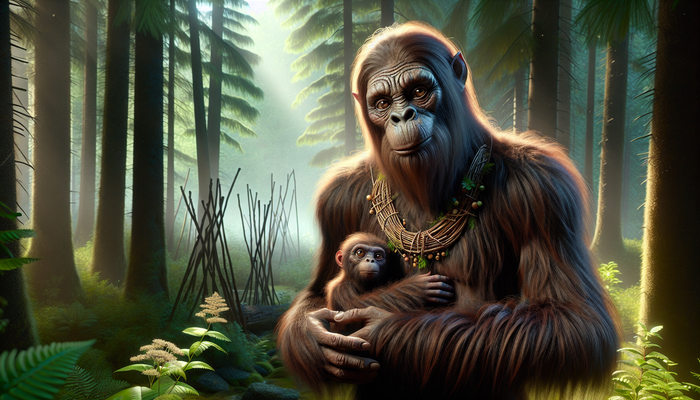
Say the name Barmanou of the Pamir Mountains and most people picture the same thing: a hairy, upright wild man stalking the snowy roof of the world, glimpsed by shepherds and never caught.
The real story is better, and a little more awkward for anyone writing headlines. The Barmanou (often spelled Barmanu) is a reported humanlike creature of northern Pakistan's mountain country. Its best-documented field investigation didn't take place in the Pamirs at all. It happened next door, in Chitral, in the Hindu Kush.
The best habit to bring to this subject is asking who wrote a source, when, and why. The Barmanou is the perfect test of it. There's no confirmed specimen. What there is, though, is a stack of carefully recorded witness interviews, folk traditions that refuse to agree with each other, a tragic research story, and some DNA results that matter more than you might expect.
Putting the Barmanou on the Right Map

Pakistani reporting describes the Barmanou as a bipedal humanoid primate reported from the mountains of north-western Pakistan, with a proposed range around Chitral and the Karakoram, squeezed between the Pamirs and the Himalaya. That's a regional association. It isn't evidence that the strongest encounters happened inside the Pamir range itself.
The mountains here do touch. Britannica describes how the Hindu Kush buttresses the Pamir range near the point where China, Pakistani-administered Kashmir and Afghanistan meet, then runs southwest through Pakistan and on into Afghanistan.
Neighbours, yes. Interchangeable, no. Calling Chitral "the Pamirs" is a bit like telling a friend you saw a pine marten in the Lake District when you were actually in the Yorkshire Dales. The hills are related. The field notes still need the right county.
And the man behind the best-documented fieldwork on this creature, the Spanish zoologist Jordi Magraner, named his study area plainly: Chitral.
| Place name | Where it sits | How I use it here |
|---|---|---|
| Pamir | The high knot of ranges the Hindu Kush meets at its eastern end | Regional backdrop, not an encounter location |
| Hindu Kush | The mountain system running southwest through Pakistan and Afghanistan | The real home turf of the best records |
| Chitral | The district named in Magraner's field report | Where the named witness cases sit |
| Ghizer | A neighbouring area with its own Barmanu stories | Treated separately, because its stories differ |
A Forest Creature, Not a Snowman
One detail rearranged my mental picture completely. Magraner's synthesis places most reported encounters in forest, above all coniferous forest, between roughly 1,500 and 4,500 metres, and most often between 2,000 and 4,000 metres.
That's not Abominable Snowman country. It's wooded slopes, seasonal grazing grounds and steep valleys where a dark shape between fir trunks would be gone before you'd finished blinking. Snow is part of the setting. It isn't the creature's whole personality.
This shift matters for anyone who'd like to go and look. You can't easily survey a glacier. A forest has water sources, food plants, shelter, shepherds' trails and known wildlife leaving its own signatures, which makes a forest-dwelling Barmanou a question you can investigate on the ground, not just a mood you can paint.
What's in a Name? Barmanu, Jangali Mosh and the Spirits

Magraner's informants didn't use one tidy label. His report records jangali mosh, translated as "man of the forest" or "wild man," and barmanu, glossed with senses like "burly," "muscle man" or "big one." He also logged names that translate as spirit, genie or ghost.
That last group fascinates me. It tells us that, for the people describing these encounters, the line between an animal and an apparition wasn't always drawn where a zoologist would draw it. Any honest account of the Barmanou has to hold both readings at once.
Even the etymology is contested. The Chitrali writer Fateh-ul-Mulk Ali Nasir derives Barmanu from the Sanskrit ban-manus, "man of the forest." Magraner's gloss runs toward "big one." I'd file both as attributed explanations, not a settled derivation.
A Chitrali Writer Pushes Back on the Single Legend
In his 2019 overview of the monsters and spirits of Khowar folklore, Ali Nasir calls Barmanu the local counterpart of the pan-Himalayan yeti. Then he does something I wish more writers did: he complicates his own subject.
In Chitral, he says, the Barmanu is relatively rare in folk tales. People know the name, but few can recall a story or a personal sighting. His own reading is that the legend reflects influences drifting in from surrounding regions.
Ghizer is different. There, the stories involve livestock being taken and attempted abductions. One account even describes a creature that seemed to wear an animal hide over its head and back, which is the sort of detail that makes a folklorist sit up and a zoologist reach for the aspirin.
The Composite Portrait From Magraner's Interviews
Magraner pulled his witnesses' descriptions into a more zoological sketch. Read the right-hand column carefully, because that's where the honesty lives.
| Trait | What the report describes | The catch |
|---|---|---|
| Height | Adult males average about 1.75 m, ranging from 1.70 to 1.85 m | Witness estimates, not a measured body |
| Build and hair | Stocky, heavily muscled, very hairy, with a comparatively bare face | A composite of many descriptions |
| Movement | Habitually upright and walking on two legs | Reported behaviour doesn't settle what kind of animal it is |
| Smell and voice | Strong unpleasant odour, grunts and guttural calls, no articulate speech | Neither trait identifies a species by itself |
| Diet | Plants, roots, fruit, insects and animal remains | Reported, not studied |
| Reaction to people | Usually avoids or flees | Clashes with some of the more menacing folklore |
Look at those two sources side by side and a gap opens up. Magraner's witnesses mostly describe something that avoids people and runs away. Ghizer's stories describe livestock being taken and attempted human abductions. Same name, very different temperament, and that mismatch is data worth keeping, not a wrinkle to iron flat.
Jordi Magraner and the Archive Behind the Legend

Every cryptid has its devoted pursuer. The Barmanou's was a young zoologist who, according to El Mundo's 2002 profile of the Spaniard who went looking for the Yeti, had given up everything to find Pakistan's Barmanu. He lived there for years, learned the language, and gathered testimony the slow way.
From fieldwork to translation: the Magraner record, 1987–2018
Sourced data: each entry cites a numbered source listed below.
-
December 1987 – October 1988 – First fieldwork phase in Chitral
The main period of interview collection.
Sources: [3]
-
January – October 1990 – Second fieldwork phase
Allowed repeat interviews with some witnesses.
Sources: [3]
-
1992 – Original report published
Appeared through the Association Troglodytes; separates the archive from later retellings.
Sources: [3]
-
May 1994 – Guttural sounds heard in Shishi Kuh
Magraner and companions reportedly heard odd guttural sounds: an auditory lead, not a sighting.
Sources: [2]
-
2002 – Magraner murdered in Chitral
Found murdered in his cottage in the Chitral valley after more than a decade of research. A tragedy, not evidence about the animal.
Sources: [1]
-
2018 – English translation published
Paul LeBlond's translation in The Relict Hominoid Inquiry makes the original record accessible; a reprint, not new fieldwork.
Sources: [3]
His main report first appeared through the Association Troglodytes in 1992. An English translation by Paul LeBlond, published in The Relict Hominoid Inquiry in 2018, makes Magraner's original report on his Chitral expeditions far easier to read today. Don't let that 2018 date fool you. It's a reprint of old fieldwork, not fresh news from the valleys.
| When | What happened | Why it matters |
|---|---|---|
| December 1987 to October 1988 | First fieldwork phase | The main period of interview collection |
| January to October 1990 | Second fieldwork phase | Allowed repeat interviews with some witnesses |
| 1992 | Original report published | Separates the archive from later retellings |
| May 1994 | Magraner and companions reportedly hear odd guttural sounds in Shishi Kuh | An auditory lead, not a sighting |
| 2002 | Magraner murdered in Chitral | A tragedy, not evidence about the animal |
| 2018 | English translation published | Makes the original record accessible |
The 2002 entry is the one I find hardest to write. Magraner was found murdered in his cottage in the Chitral valley, where he'd spent more than a decade researching a creature Dawn's report says was known locally as "Ice Man." His death is a tragedy. It isn't evidence for or against the animal he was looking for, and anyone who spins it into a cover-up is trading a man's life for a plot twist.
Counting the Accounts Properly
The report summarises 27 accounts covering 31 incidents: 24 encounters and seven observations of tracks. Magraner interviewed 21 people and separated direct observers from informers who were passing on what others had seen.
So don't read that total as 31 sightings. Some incidents are footprints. Some accounts are secondhand. None of them is an independently verified sighting in the sense a field biologist would mean.
Lal Khan and the Figure Under the Fir Tree
Lal Khan reported encounters in 1985, 1986 and 1987. Magraner recorded him on 22 April 1988 and again on 30 January 1990. Keep those two sets of dates apart. Encounter and interview dates differ, and muddling them is a common kind of chronological confusion.
The 1987 account is wonderfully specific. A hairy figure came out from shelter beneath a fir tree. It threw a stone. It moved about with a stick, gathered plants, then climbed away uphill and out of sight. Khan put the distance at about 10 metres and the duration at more than ten minutes.
Ten minutes is a long time. Count it out next time you're waiting for the kettle. That length and closeness make his testimony valuable for comparing behaviour and viewing conditions. They don't, on their own, tell us what the figure was.
Purdum Khan's Two Hours
Purdum Khan's encounter dates to September 1977, but Magraner didn't record it until January 1988. He described watching a hairy male from about three or four metres for roughly two hours.
Two hours, barely a room's width away. As told, it's a reported close encounter. But a decade sat between the event and the interview, and that delay limits interpretation. A detailed account given so long afterwards is useful material for comparison. It isn't the same thing as a photograph from the time, recovered tissue or an independently documented observation.
The Method: Real Strengths, One Blind Spot
Magraner did plenty right. He learned the local language, collected repeat narratives from the same people, used a 63-question anatomical questionnaire, gathered witness sketches and showed comparison images.
The blind spot sits in those images and questions. They were built around a specific model: Bernard Heuvelmans' proposed "Pongoid Man." Witnesses reportedly picked that picture. Which sounds like corroboration, until you learn where the picture came from.
Tracks, Sounds and the Iceman Problem

The Barmanou file holds several different kinds of evidence, and the fastest way to get muddled is to tip them all into one bucket. I sort material into three tiers. A lead is a rumour of buried treasure. A trace is a coin found in the mud. An identification is the assay report telling you what metal the coin is made of. Most of the Barmanou file lives in the first two tiers.
| Evidence | What it gives us | What it can't prove |
|---|---|---|
| Witness narratives | Locations, behaviour, descriptions and survey leads | Independent confirmation of the animal |
| Reported tracks, some watched through binoculars | Physical traces that can be compared | A species, without diagnostic documentation |
| Guttural sounds in Shishi Kuh, 1994 | An auditory encounter worth noting | That the caller was an unknown primate |
| Alleged hair, droppings and casts mentioned in later journalism | Material that could, in principle, be tested | An identification just because something was collected |
| Witnesses choosing the "Pongoid Man" image | A record of how witnesses responded to pictures | That the picture shows a real animal |
Why the Minnesota Iceman Haunts This Story
The "Pongoid Man" came out of Heuvelmans' interpretation of the Minnesota Iceman, a frozen hairy body that researchers examined in the 1960s. As zoologist Darren Naish lays out in his history of the strange case of the Minnesota Iceman, Heuvelmans treated it as a new kind of hominid and named it Homo pongoides. The object was later identified as a model.
Naish's point is sharp: if the reference animal is a model, matching other reports to its features can't validate the species. Carry that over to Chitral and the problem jumps out. When witnesses pick a researcher-chosen picture, the agreement tells you something about the picture and the interview, and very little independent about the animal.
This doesn't mean every Barmanou witness was mistaken. It means the order of questions matters. If I were running interviews tomorrow, I'd ask for a free description and the witness's own drawing first, show comparison images only afterwards, and archive the full image set so others could check how it was used.
Bears, Borrowed Stories or Something Unknown?
Ali Nasir proposes upright bears as a general explanation for many sightings. Magraner leaned toward a relict hominin, comparing descriptions with Neanderthals, while openly admitting that assigning a species needs a body to examine. Pakistani newspapers have asked the blunt version for years, as in Dawn's wildlife feature on whether the Barmanu is fact or fiction.
Neither camp resolves every account. The sensible move is to take each case and ask which explanation fits its independently documented details best: a known animal misidentified, a story shaped by culture and expectation, or an animal science hasn't described. Excitement isn't one of the scoring criteria.
A bear standing on its hind legs in poor light is a perfectly respectable answer. It deserves the same case-by-case hearing as any other.
What DNA Has Actually Told Us About Himalayan Wild Men

The most useful lab comparison we have is Lan, Lindqvist and colleagues' 2017 genetic study of Himalayan bears and the identity of the yeti. It analysed 24 specimens in total, mixing alleged yeti material with other bear samples.
The University at Buffalo's summary of the yeti DNA findings breaks down the nine purported yeti specimens: one dog, one Asian black bear, one Himalayan brown bear and six Tibetan brown bears. Eight bears and a dog. No unknown primates.
Provenance Isn't Identity
The samples were bone, tooth, skin, hair and faeces tied to the Himalayas and the Tibetan Plateau. One tooth came from a stuffed exhibit and turned out to belong to a domestic dog. Somewhere, I suspect, an exhibit label has some explaining to do.
This is the part I'd underline twice. An object's history as a "yeti sample" is a claim about the object. The DNA is a test of that claim. And when the test lands on a known animal, nothing has been wasted. We've learned something real about the region's bears, some of which belong to distinctive regional lineages in their own right.
The Polar Bear That Wasn't
In 2014, a genetic analysis of hair samples attributed to yeti, bigfoot and other anomalous primates used a short stretch of mitochondrial DNA and linked two alleged yeti hairs to a subfossil polar-bear sequence. That was an exciting result.
Short mitochondrial sequences can have limited identification power, and here the trouble was length. Placing closely related bears from a short fragment is like identifying a novel from one sentence: an awful lot of books could contain it. The 2017 team explained that the fragment wasn't informative enough, and their analysis placed the Ladakh material with living Himalayan brown bears.
What the DNA Doesn't Touch
This is where I'd ask you to be as fair to the Barmanou as you'd be to the sceptics. The paper does not identify any tested specimen as belonging to Magraner's named Barmanou cases. The bear results are a strong warning about mislabelled Himalayan material. They are not a verdict on Lal Khan's fir tree or Purdum Khan's two hours. Unsampled historical accounts remain exactly that: unsampled.
How a Rumour Becomes a Species: The Saola

If you want to see what success looks like, go to Vietnam in May 1992, the same year Magraner's report first appeared. A joint survey of the Vu Quang Nature Reserve found three sets of long, straight horns of a new bovid in hunters' houses. Follow-up visits produced skulls, teeth and skins.
The formal Nature description laid out differences in appearance, anatomy and DNA sequence strong enough to name a new genus and species. WWF's account of the saola's first scientific documentation credits a skull in a hunter's home as the moment the team knew they had something extraordinary.
I love this story, and I want to be careful with it. The saola doesn't make the Barmanou more likely by analogy. What it offers is one useful model for investigating a possible discovery: local knowledge, then physical material, then anatomy and genetics all pointing the same way. Hunters' houses did the first half of the work. Laboratories finished it.
A Better Way to Search the Hindu Kush

Being pro-cryptozoology doesn't mean promising that every mystery hides a new animal. It means designing searches that produce something worth having whatever the answer turns out to be.
Borrow From the Snow-Leopard Researchers
Pakistan already has a working model. A study identifying priority areas for snow-leopard conservation in Pakistan combined camera trapping, sign surveys and genetic sampling, with local communities providing logistical support. Its analysis took in Chitral and graded habitat by quality and connectivity, instead of treating every remote mountain as equally promising.
The district's own Chitral Conservation Strategy put weight on organised rural communities and flagged settlement creeping up into the uplands. That second point should worry anyone who cares about shy animals, known or unknown.
The template for an enthusiast-backed project almost writes itself:
- Partner with established researchers instead of freelancing in someone else's valley.
- Record known species as carefully as anything odd.
- Choose survey sites from documented habitat and encounter records, not from the most dramatic photograph on the internet.
If the cameras catch nothing stranger than a snow leopard, that's still a very good day's work.
Environmental DNA: Promising, Not Magic
Airborne environmental DNA (eDNA) sampling is a developing detection method. In one striking trial, Lynggaard and colleagues used airborne environmental DNA sampling at Copenhagen Zoo to detect 49 vertebrate species. My first reaction was to picture a hoover strapped to a mule somewhere above Shishi Kuh.
The researchers are careful, though. They discuss contamination and the work still needed before the method is dependable in wild habitats. A zoo full of known animals isn't a mountain forest, and there's no proven Barmanou-detecting gadget yet.
Why Finding Nothing Isn't Proof of Nothing
Field biologists have a tidy tool for this problem: imperfect-detection occupancy models. Work by MacKenzie and colleagues on estimating site occupancy when a species is detected imperfectly explains why a survey that misses an animal doesn't prove the animal is absent. Animals hide. Cameras fail. Surveyors walk straight past.
The principle cuts both ways, and enthusiasts sometimes skip this half. A pile of non-detections can't be flipped into positive evidence for the Barmanou. Missing proof is a reason to keep looking carefully, not a reason to believe.
Respect the People Who Tell the Stories
The witnesses are the archive. Anyone collecting new accounts should let interviewees decide whether their names, stories or locations get published. Trespass, intrusive searches and disturbing wildlife cost a great deal and gain nothing. The quickest way to lose a community's stories is to treat their valleys like a theme park.
Questions About the Barmanou

Is the Barmanou a confirmed animal?
No. Its existence as a distinct animal is scientifically unconfirmed. The record rests on reports and traces, not a diagnostic specimen.
Is the Barmanou the same as the Yeti?
Writers compare them, and Ali Nasir calls Barmanu the local counterpart of the yeti. Similar traditions don't prove a single species, though. I treat the link as a cultural and cryptozoological association, not a shared identity.
Did Magraner ever see one?
His report records interviews and track investigations. Later reporting describes unusual guttural sounds his party heard in 1994, not a confirmed visual encounter by his team.
Could the Barmanou be a surviving Neanderthal?
It's a hypothesis in the cryptozoological literature, and Magraner made Neanderthal comparisons himself. He also recognised that nobody can assign a species without examining a specimen.
Why take it seriously at all?
Because careful documentation tests claims, preserves people's accounts with proper credit, and produces useful wildlife records along the way. Serious interest doesn't require swallowing the most extraordinary explanation in advance.
Why I Keep the Chitral File Open

Two less obvious lessons come out of this case. Agreement isn't always independence: when witnesses converge on a picture someone handed them, the convergence may be an echo. And a known-animal result is never a failed investigation. The yeti samples taught us about Tibetan brown bears. A camera survey could also produce useful records of known wildlife.
Check your Barmanou field notes
Sourced data: each entry cites a numbered source listed below.
-
Where was Jordi Magraner's study area?
-
How many accounts and incidents does Magraner's report summarise?
-
Where do reported Barmanou encounters most often cluster?
-
What was Heuvelmans' 'Pongoid Man', used in Magraner's comparison images, based on?
-
What did the 2017 DNA study find for the nine purported yeti specimens?
-
What material led scientists to document the saola in 1992?
Answers
-
Chitral, in the Hindu Kush
Magraner named his study area plainly: Chitral. The Hindu Kush buttresses the Pamirs, but the two names aren't interchangeable.
-
27 accounts covering 31 incidents
The report summarises 27 accounts covering 31 incidents: 24 encounters and seven observations of tracks, from interviews with 21 people.
Sources: [2]
-
Coniferous forest at about 2,000–4,000 m
Magraner's synthesis places most encounters in forest, above all coniferous forest, between roughly 1,500 and 4,500 m and most often 2,000–4,000 m.
Sources: [2]
-
The Minnesota Iceman, later identified as a model
Heuvelmans named the frozen Minnesota Iceman Homo pongoides, but it was later identified as a model, so matches to it can't validate a species.
-
Eight bears and one dog
The specimens were one dog, one Asian black bear, one Himalayan brown bear and six Tibetan brown bears: no unknown primates.
-
Horns found in hunters' houses
A May 1992 survey of Vu Quang Nature Reserve found three sets of long, straight horns in hunters' houses; skulls, teeth and skins followed.
Sources: [4]
Sources
- https://pmc.ncbi.nlm.nih.gov/articles/PMC5740279
- How People were made: All the birds and animals of the mountains went to Hocheu (Painted Rock) to make People
- Hindu Kush | Meaning, History, Geography, & Map | Britannica
- A new species of living bovid from Vietnam | Nature
- The Strange Case of the Minnesota Iceman | Scientific American
- Study ties DNA samples from purported yetis to Asian bears - UBNow: News and views for UB faculty and staff - University at Buffalo
Magraner left both an interpretation and a documentary archive. The archive is the part I'd keep open: 27 recorded accounts with dates, distances, names and sketches that anyone can still read, question and test.
Those accounts came from people describing something strange, and Magraner was patient enough to write them down properly. The next person to walk those fir slopes should carry a sample tube, a camera trap and, before anything else, a willingness to listen without showing anyone a picture first.
From Bigfoot to UFOs: Hangar 1 Publishing Has You Covered!
Explore Untold Stories: Venture into the world of UFOs, cryptids, Bigfoot, and beyond. Every story is a journey into the extraordinary.
Immersive Book Technology: Experience real videos, sights, and sounds within our books. Its not just reading; its an adventure.